
Tuesday | 6th January 2026
Amid growing alarm in Europe that Greenland, the vast and strategically critical Arctic territory governed by Denmark, remains firmly in the sights of the Trump administration, Denmark’s prime minister has issued an unusually blunt warning to Washington about the consequences of any attempt to seize the island by force.
In nationally televised remarks, Prime Minister Mette Frederiksen reminded the Danish public — and the White House — that Copenhagen’s position on Greenland’s future has long been unequivocal. “I have made it very clear where the Kingdom of Denmark stands,” Frederiksen said, emphasizing that Greenland’s elected leadership has repeatedly and unambiguously rejected any notion of becoming part of the United States. “Greenland has said again and again that it does not want to be part of the United States.”
But Frederiksen went further, raising the stakes by openly addressing a scenario that until recently would have been unthinkable: the use of US military power against a fellow NATO ally. President Donald Trump has pointedly refused to rule out such action, fueling deep unease among Denmark’s allies.
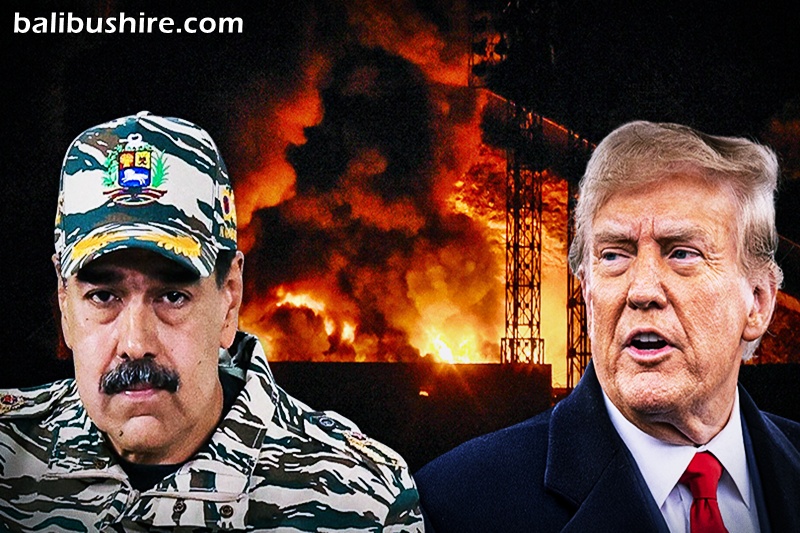
“First of all, I think you have to take the US president seriously when he says he wants Greenland,” Frederiksen said, reflecting heightened anxiety in Copenhagen following Trump’s extraordinary decision to use military force in Venezuela — a move that many European leaders view as evidence of a more aggressive and unilateral American posture.
She then delivered a stark warning about the implications for the Western security order. “If the United States chooses to attack another NATO country militarily, everything stops,” Frederiksen said. “That includes NATO itself, and thus the security that has been provided since the end of World War II.”
That warning resonates far beyond Denmark. Among NATO allies, there is a growing and widely shared concern that the Greenland issue could do more than simply strain relations with a longtime US partner. Officials fear it could fundamentally fracture the alliance at a time when unity is already under pressure from wars, sanctions, and geopolitical competition with Russia and China.
Trump underscored his determination on Sunday, once again insisting that Greenland is vital to American interests. Speaking to reporters aboard Air Force One, he said the United States needs Greenland “from the standpoint of national security.”
“It’s so strategic right now,” Trump said. “Greenland is covered with Russian and Chinese ships all over the place. We need Greenland from the standpoint of national security, and Denmark is not going to be able to do it.”
Those remarks followed a provocative social media post by Katie Miller, a close Trump ally and the wife of Stephen Miller, the deputy White House chief of staff for policy. On Saturday, she posted an image of Greenland overlaid with the American flag on X, accompanied by a single word: “SOON.”
For Denmark and its European partners, the post served as another reminder that Trump’s long-stated ambition to acquire Greenland — first publicly floated during his earlier presidency — has not faded. Instead, it appears to have hardened into a core strategic objective, leaving Washington’s traditional allies increasingly unsettled.
CNN visited Greenland in October, as the Danish military carried out an unprecedented show of force across land, sea, and air. Officially, the exercises were described as a deterrent aimed at countering what Denmark says are growing Russian and Chinese activities in the Arctic.
While Moscow remains heavily bogged down in its war in Ukraine, Danish military officials told CNN they fully expect Russia to redirect resources northward once that conflict eventually winds down. They believe Russia could leverage hard-earned battlefield experience to pose a more serious challenge in the Arctic, where melting ice is opening new shipping routes and access to natural resources.
China, meanwhile, has steadily expanded its Arctic footprint. It has participated in joint patrols and exercises with Russian vessels, invested in Arctic infrastructure projects, and advanced plans for a so-called “polar silk road” to facilitate shipping through Arctic waters. Beijing has even declared itself a “near-Arctic state” — despite the fact that its northernmost major city, Harbin, lies roughly as far north as Venice, Italy.
Yet in private conversations and face-to-face meetings, senior Danish military commanders told CNN that neither Russia nor China currently poses a serious military threat to Greenland itself.
“I don’t think we have a threat to Greenland right now,” Major General Søren Andersen, chief of Denmark’s Joint Arctic Command, said bluntly.
Danish officials also argue that Greenland’s geography makes it far easier to defend than outsiders might assume. The world’s largest island — roughly the size of six Germanys, or about the combined area of Alaska and California — is defined by brutal weather, towering mountains, and vast stretches of undeveloped land. According to one Danish military official, the island’s entire east coast is “virtually unconquerable,” due to its lack of ports, roads, and usable landing sites.
Privately, Danish military sources acknowledged that the high-profile maneuvers were aimed less at Moscow or Beijing than at Washington. The real message, they said, was intended for President Trump: Denmark takes Greenland’s defense seriously and is fully capable of securing it, in the hope that such a display might convince him to abandon any thoughts of taking control of the territory.
So far, that strategy appears to have failed.
With the Trump administration seemingly emboldened by what it views as a decisive success in Venezuela, European officials fear the question of Greenland — and the broader cohesion of the Western military alliance — is once again entering dangerous and uncertain territory.