
Tuesday | 2 December 2025
Bangkok — For nearly a week, Wassana Suthi watched helplessly as floodwaters swallowed the streets around her small nursing home in Hat Yai, transforming what was once a bustling southern Thai city into an island of isolation and fear. Rising water cut off all road access, leaving Suthi, her husband, 10 staff members and several immobile patients trapped inside with dwindling supplies and no outside contact — except for a single helicopter that dropped emergency aid onto their roof.
Hat Yai is among hundreds of communities across Southeast and South Asia devastated by a deadly combination of cyclonic storms and intense monsoon rains. From Indonesia to Sri Lanka, rivers have burst their banks, hillsides have collapsed, and entire neighborhoods have been swept away.
At least 1,250 people are confirmed dead across the region, according to a tally of national disaster agencies compiled by CNN. Hundreds more remain missing, and over one million people have been forced from their homes. Rescue teams continue to dig through thick mud and shattered buildings as authorities warn the death toll is likely to rise.
A major transport and commercial hub in Songkhla province, Hat Yai was hit especially hard. Floodwaters surged through the city to heights of up to eight feet, submerging vehicles, markets and homes. Inside her nursing facility, Suthi could only react as the water advanced room by room.
“It rained so much that you couldn’t leave the house,” she recalled.
The ground floor was the first to be overwhelmed, forcing staff to urgently move frightened elderly residents and immobile patients upstairs. Soon after, the main electricity supply was cut. With oxygen tanks for critical patients running low, the team switched to battery power and rationed what little energy remained.
For days, Suthi and her staff worked by candlelight in suffocating heat and darkness, struggling to keep their patients alive while surrounded by murky floodwater. Their only lifeline to the outside world came from above, when a Thai Army helicopter briefly appeared through heavy clouds to drop food and essential supplies on the rooftop.
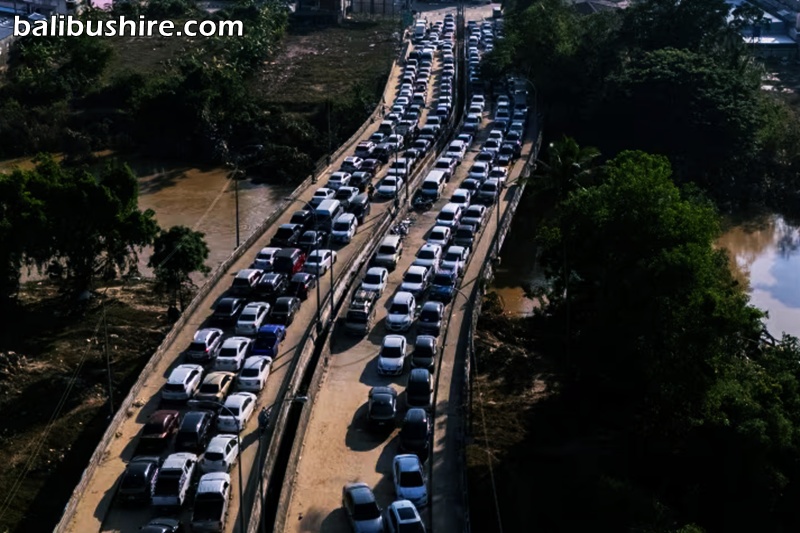
When the waters finally receded over the weekend, they revealed a city caked in mud and strewn with debris. Dozens of cars lay abandoned along the streets, while residents lined up for food and searched desperately for missing relatives.
“It was almost like a movie scene, like an apocalypse,” Suthi said.
Even now, as cleanup efforts continue, her greatest worry is the survival of her most fragile patients. “I am now more concerned about liquid food for my patients. Since we have to feed them through the nose, it is so difficult to find those supplies in my area right now,” she said.
Most of the 181 deaths reported in Thailand from the current disaster were recorded in Songkhla province, underscoring the exceptional severity of the flooding there.
Hundreds Missing as Region-Wide Disaster Unfolds
The catastrophe extends far beyond Thailand’s borders. In Indonesia, at least 744 people were killed and 551 remain missing after Cyclone Senyar triggered massive landslides and flash floods across Sumatra — an island famed for its rainforests, volcanoes and critically endangered orangutans.
Nearly a thousand miles away, Sri Lanka has been battered by Cyclone Ditwah, which unleashed the island’s worst flooding in a decade, Reuters reported. According to the country’s Disaster Management Center, the death toll there has climbed to 410, with 336 people still unaccounted for.
International assistance has begun pouring in. India deployed military helicopters and naval vessels to aid rescue operations and deliver humanitarian supplies. The Indian Air Force has rescued foreign nationals from multiple countries, including Germany, the United Kingdom, Australia, Pakistan and Bangladesh.
Even regional rivals have set aside tensions in the face of the humanitarian crisis. Pakistan has dispatched a military rescue team to Sri Lanka, according to the country’s National Disaster Management Authority.
Fears for the Future
Back in southern Thailand, as residents shovel mud from their homes and salvage what little remains, anxiety is growing about what future rainy seasons might bring. Climate scientists have repeatedly warned that warming oceans are intensifying both monsoon rainfall and tropical cyclones, making extreme flooding more frequent and more destructive.
For Suthi, the trauma is still raw. Standing in the muddy remains of her nursing home, she wonders how her patients — and her city — will cope if such a disaster strikes again.
“It was never this severe before,” she said. “But this year, everyone is saying the same thing: it was like a tsunami.”