
Monday | July 14, 2025
South African President Cyril Ramaphosa placed Police Minister Senzo Mchunu on immediate leave of absence on Sunday, following explosive accusations by KwaZulu-Natal Police Commissioner Nhlanhla Mkhwanazi that Mchunu had colluded with criminal networks and interfered in sensitive, high-profile investigations. The decision marks a significant moment for Ramaphosa, who came to power on a platform of cleaning up government and rooting out corruption within the state.
At a nationally televised media briefing last Sunday, Mkhwanazi alleged that Mchunu had not only obstructed key investigations but had actively protected individuals connected to a sprawling criminal syndicate operating across provincial and national levels. One of the most serious claims was that Mchunu ordered the disbanding of a specialized police unit tasked with investigating political killings in KwaZulu-Natal—one of South Africa’s most volatile provinces when it comes to intra-party violence, particularly within the ruling African National Congress (ANC).
According to Mkhwanazi, more than 100 case files related to political assassinations and attempted murders were removed from the task team’s jurisdiction and have since been shelved without further investigation. He alleged that this move was intended to shield high-profile political figures, law enforcement officials, and other individuals allegedly tied to criminal activities.
Mchunu has categorically denied the accusations, calling them “baseless” and “deeply irresponsible.” In a statement issued by his spokesperson earlier last week, he reaffirmed his commitment to constitutional governance and the rule of law. “I have never used my position to obstruct justice or to shield any individual from accountability,” Mchunu said, pledging his full cooperation with any investigation.
Nonetheless, the allegations have ignited widespread concern. Civil society groups, opposition parties, and even members of Ramaphosa’s own cabinet have demanded urgent action to protect the credibility of South Africa’s justice system. The Democratic Alliance (DA), the ANC’s primary coalition partner in the national unity government, has called for an independent parliamentary inquiry. Other opposition parties, including the Economic Freedom Fighters (EFF) and Inkatha Freedom Party (IFP), have demanded Mchunu’s immediate suspension and even his resignation.
With South Africa already struggling under a high crime rate—something the World Bank estimates is draining nearly 10% of the nation’s GDP annually—investors and citizens alike are watching developments closely. The allegations against a sitting police minister not only strike at the heart of the country’s security apparatus, but also risk further damaging investor confidence at a time when the economy is in desperate need of growth and reform.
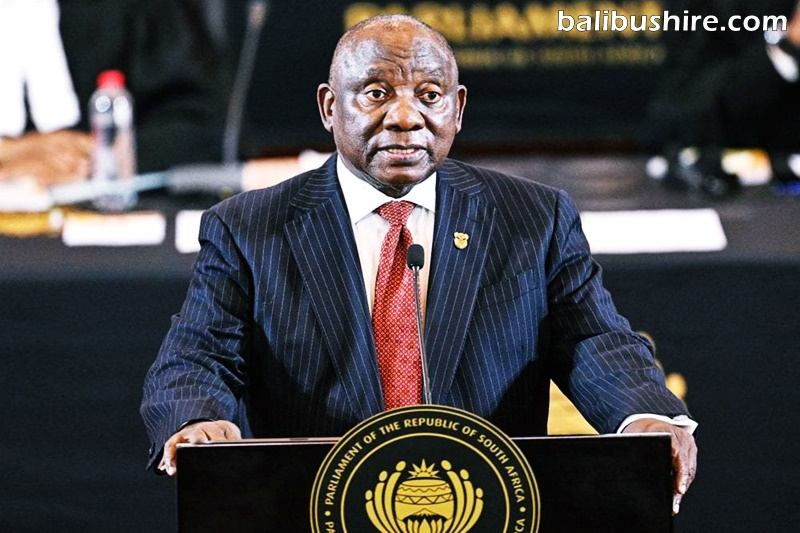
In a televised address carried live by both the South African Broadcasting Corporation (SABC) and major private networks, Ramaphosa described the accusations as “grave and profoundly disturbing.” He announced that a judicial commission of inquiry would be established to independently probe the matter. “These allegations therefore call for an urgent and comprehensive investigation,” Ramaphosa stated, pledging that no one would be above the law.
To ensure continuity in the police ministry, Ramaphosa appointed prominent constitutional law scholar and former member of Parliament, Professor Firoz Cachalia, as acting minister of police. Cachalia’s appointment is seen as an effort to restore public confidence, given his longstanding reputation for integrity and his previous role as a member of South Africa’s National Planning Commission.
Mchunu, a veteran politician and former premier of KwaZulu-Natal, remains a powerful figure within the ANC. Analysts note that he was widely seen as a potential contender for a senior leadership role at the ANC’s next national elective conference in 2027. The unfolding scandal could severely damage those prospects and destabilize factional dynamics within the party.
As pressure mounts, political observers say the outcome of the investigation could become a defining moment for Ramaphosa’s presidency and for the ANC’s credibility ahead of the 2026 local government elections.