
Saturday | 24th October 2026
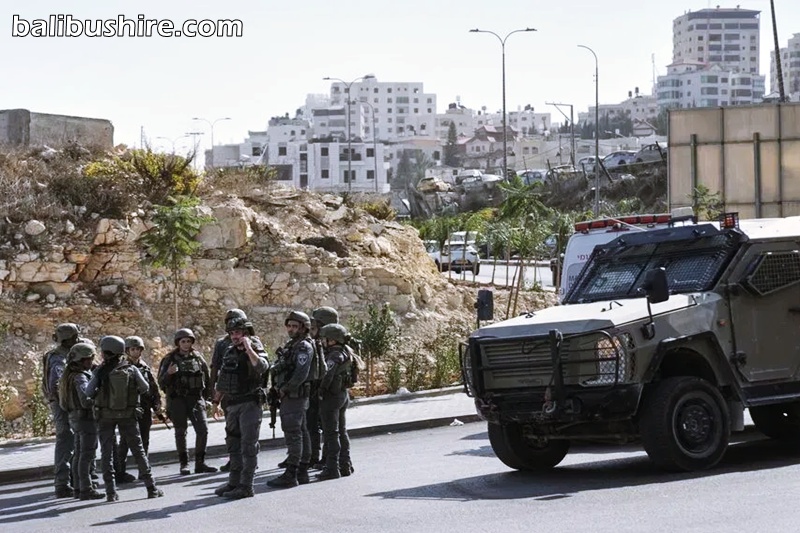
Israel began demolishing buildings and ordering Palestinian residents to evacuate a neighborhood in the occupied West Bank on Friday, following a deadly shooting at an Israeli military checkpoint in Hebron that killed two Israeli soldiers and wounded three others. The incident triggered an immediate Israeli security response, including a large-scale counterterrorism operation, movement restrictions, searches for suspected militants, and the destruction of structures authorities said could pose a security threat.
The escalation came just four days before Israel was scheduled to hold elections, placing Prime Minister Benjamin Netanyahu under renewed scrutiny over his government’s security policies. Netanyahu has repeatedly sought to present himself as a hard-line leader capable of protecting Israelis from attacks, particularly since the Hamas-led assault on Israel on October 7, 2023. The latest violence in Hebron has once again brought security, military operations, and the government’s approach to the Israeli-Palestinian conflict to the forefront of the political debate.
Deadly Shooting Triggers Israeli Security Operation
According to the Israel Defense Forces (IDF), two Palestinian gunmen opened fire on an Israeli military checkpoint in Hebron on Friday, killing two soldiers and lightly wounding three others. Israeli forces returned fire, killing both attackers at the scene.
Videos recorded during the incident showed an exchange of gunfire between the Palestinian gunmen and Israeli security forces that continued for several minutes. Repeated bursts of gunfire could be heard as soldiers and emergency responders attempted to secure the area and assist the wounded.
In one video obtained by Reuters, an Israeli responder said the shooting had continued for at least 20 minutes and described difficulties removing wounded personnel from the scene. The footage illustrated the intensity of the confrontation and the challenges faced by emergency teams operating in an active firefight.
The IDF subsequently reported locating a vehicle allegedly used by the attackers. The vehicle contained what the military described as a large quantity of ammunition, raising concerns that the gunmen might have been preparing to carry out additional attacks.
Following a security assessment, IDF Chief of Staff Lieutenant General Eyal Zamir described the incident as a serious terrorist attack. He said the rapid response by Israeli forces had prevented further casualties among civilians and security personnel.
Zamir also stated that the ammunition recovered from the vehicle was intended for an attack on a much larger scale. The military said it would intensify intelligence operations, pursue additional suspects, and expand efforts to identify people believed to have been involved in planning or supporting the shooting.
Israeli authorities did not immediately provide further publicly available details about the alleged broader attack plot.
Netanyahu Orders Closure Measures Across the West Bank
Following the shooting, the Israeli military announced that it was imposing what it called a full siege on Hebron. Netanyahu also said he had ordered a complete closure of the occupied West Bank beginning Friday, a measure that threatened to restrict movement between Palestinian cities, towns, and villages.
However, hours later, the prime minister appeared to soften the scope of the proposed restrictions. He said the government would consider imposing a cordon around Hebron and the nearby city of Halhul, with the possibility of extending restrictions to other areas.
The changing statements created uncertainty about the precise geographical scope of the measures and how they would affect Palestinian residents.
Hebron is one of the largest Palestinian population centers in the West Bank and has long been a focal point of Israeli-Palestinian tensions. The city contains a complex security arrangement, including areas under Palestinian civil administration and parts of the city where Israeli forces maintain direct control. Israeli settlements and military installations within and around Hebron have contributed to recurring confrontations, movement restrictions, and disputes over access.
A broad closure or cordon can have consequences far beyond the immediate site of an attack. Restrictions on roads and movement may prevent residents from reaching workplaces, schools, hospitals, markets, and other essential services. They can also affect commercial deliveries and the movement of emergency vehicles.
For Palestinians living in the affected areas, the immediate concern was not only the security operation itself but also the possibility that restrictions and evacuations could continue for several days.
Residents Ordered to Leave as Demolitions Begin
Later on Friday, Israeli forces began demolishing structures in the Farsh al-Hawa area of Hebron, the neighborhood identified by Israeli authorities as the place from which the gunmen operated.
Netanyahu said the military would forcibly evacuate the area and fundamentally transform it, describing an approach similar to Israeli operations conducted in northern West Bank refugee camps in early 2025.
In footage obtained by CNN, an Israeli soldier can be heard ordering residents of a housing complex to leave within five minutes.
The short deadline highlighted the pressure facing families who were required to leave their homes while military personnel conducted searches and demolitions. Residents facing such orders may have little time to collect personal belongings, secure important documents, arrange transportation, or determine where they can safely stay.
Netanyahu defended the operation, saying the military would evacuate residents, search homes, remove weapons discovered during the operation, and destroy infrastructure that Israeli authorities considered connected to militant activity.
“That is exactly what we will do here, in a neighborhood in Hebron from which the terrorists came,” Netanyahu said. He added that the military would proceed from house to house to locate weapons and dismantle what he described as terrorist infrastructure.
Israeli authorities said the demolitions targeted illegal structures that could pose a security threat. However, the destruction of buildings and the removal of residents from a residential neighborhood have raised broader questions about the proportionality of the response, the protection of civilians, and the legal obligations of an occupying power.
The circumstances surrounding each demolished structure, including its ownership, occupancy, and alleged connection to the attack, are important to determining whether individual actions comply with international law.
Israeli Military Announces Several-Day Counterterrorism Operation
The IDF and the Israel Security Agency (ISA), Israel’s domestic security service, announced a counterterrorism operation expected to last several days in the Hebron area.
According to their joint statement, Israeli forces would conduct targeted searches to locate weapons, identify suspected militant infrastructure, and question people believed to possess relevant information.
The agencies said the operation was restricted to the area from which the attackers allegedly operated, although the broader security measures announced earlier included cordons, roadblocks, and counterterrorism activities elsewhere in the surrounding sector.
The operation was described as a continuation of measures launched immediately after the shooting. These included mapping the residences of the two attackers, establishing security perimeters around Hebron and Halhul, setting up roadblocks, and searching locations considered relevant to the investigation.
Israeli authorities said residents would be permitted to leave the affected area through three designated exit points. Those leaving would undergo security screening and questioning, while individuals who raised suspicions would be referred to security personnel for additional interrogation.
The military said the procedures were intended to help identify weapons, suspects, and other evidence connected to the attack.
Nevertheless, security screenings and movement restrictions can place considerable pressure on civilians who are not involved in the violence. The operation’s impact will depend in part on how long the restrictions remain in place, whether residents can return to their homes, and what happens to buildings damaged or destroyed during the searches.
Israel’s Previous Operations in Northern West Bank Refugee Camps
Netanyahu’s reference to operations in Jenin, Tulkarm, Nur Shams, and Al-Far’a raised concerns that the Hebron operation could follow a similar pattern of evacuations and extensive destruction.
In early 2025, Israeli military operations in northern West Bank refugee camps displaced thousands of Palestinians and emptied entire neighborhoods as forces conducted searches and targeted suspected militant networks.
Israeli officials presented those operations as necessary to dismantle armed groups, locate weapons, and prevent attacks against Israeli civilians and security personnel. Palestinian residents and human rights organizations, however, raised concerns about the scale of the destruction, restrictions on movement, and the inability of displaced families to return to their homes.
The operations also intensified debate over the long-term consequences of repeated military incursions in densely populated Palestinian areas.
The comparison is significant because the use of evacuation orders and demolitions can transform a military operation from a temporary security intervention into a prolonged humanitarian and housing crisis. Families who lose their homes may face difficulties finding alternative accommodation, maintaining employment, and keeping children in school.
In Hebron, the extent of the displacement and destruction remained uncertain as the operation began. The central questions included how many households would be required to leave, how long residents would remain excluded from the area, and whether demolished structures would be rebuilt or remain inaccessible.
B’Tselem Condemns Plans to Displace Palestinian Residents
The Israeli human rights organization B’Tselem strongly criticized the announced evacuation and demolition plans, warning that they risked repeating the mass displacement and destruction witnessed in northern West Bank refugee camps.
Yuli Novak, the organization’s executive director, accused Netanyahu and Israeli Defense Minister Israel Katz of publicly declaring their intention to empty a Palestinian neighborhood in Hebron.
“Israel is announcing its next crimes in advance,” Novak said, condemning the proposed operation and comparing it with previous displacement in the northern West Bank.
B’Tselem’s criticism reflects wider concerns among human rights organizations about the consequences of military operations that remove civilian populations from their homes and destroy residential infrastructure.
Under international humanitarian law, an occupying power has obligations to protect civilians and their property. Evacuations may be permitted in narrowly defined circumstances, including when the security of the population or imperative military reasons require them, but they must comply with applicable legal safeguards. Displacement cannot be justified simply by describing an area as a security concern.
The legality of demolitions likewise depends on the circumstances and justification for each action. Security claims do not automatically make the destruction of residential property lawful, and measures affecting civilians must be assessed against the relevant rules of international humanitarian law.
The disagreement over the Hebron operation therefore extends beyond the immediate military response. It concerns whether the measures are necessary and proportionate, whether residents are adequately protected, and whether displaced families will be allowed to return when the security operation ends.
Netanyahu Vows to Pursue Hamas and Other Suspects
Netanyahu said Israel would continue pursuing individuals it believed were responsible for the shooting, as well as those suspected of organizing or supporting the attackers.
“We will pursue Hamas terrorists and those who sent them, wherever they are and at all times,” he said in a statement.
Hamas praised the attack in a statement but did not claim responsibility for carrying it out. The distinction is important: a statement welcoming or praising an attack does not, by itself, establish that an organization planned or directed it.
Israeli security agencies said their investigation would continue alongside the searches, evacuations, and demolitions. Authorities also indicated that additional arrests were expected as investigators worked to identify possible accomplices and trace the source of the weapons and ammunition found in the vehicle.
The investigation’s findings could influence the scope of subsequent operations, particularly if Israeli authorities identify additional suspects or locations they believe are connected to the shooting.
At the same time, the continued expansion of security measures could increase tensions in Hebron and surrounding communities, particularly if restrictions remain in place or more residents are ordered to leave.
Attack Adds Pressure Ahead of Israeli Elections
The shooting occurred just four days before Israel’s scheduled elections, making the incident politically significant for Netanyahu and his government.
Since the Hamas-led attack of October 7, 2023, national security has been central to Israeli political debate. Netanyahu has sought to emphasize his record as a leader prepared to use military force against perceived threats, while critics have questioned the government’s handling of security, the wider regional conflict, and the consequences of prolonged military operations.
The latest attack provided a fresh test of the government’s ability to prevent violence and respond decisively when Israeli personnel are targeted.
For Netanyahu, the challenge is twofold. He must demonstrate that the military can respond effectively to attacks while confronting questions about whether increasingly extensive operations will provide lasting security or deepen the cycle of violence.
His main rival, former IDF Chief of Staff Gadi Eisenkot, expressed sympathy for the victims and their families in a statement posted on X.
“Together with all the people of Israel, I pray for the full and speedy recovery of those wounded in the attack,” Eisenkot said.
His response underscored that, despite political competition, the deaths and injuries among Israeli soldiers were a matter of immediate national concern.
However, the wider political implications of the operation may depend on developments over the following days, including whether additional attacks occur, whether the military discovers evidence of a broader plot, and whether the demolitions and evacuation orders provoke further unrest.
A Deepening Humanitarian and Security Crisis in the West Bank
The developments in Hebron illustrate the difficult relationship between immediate security concerns and the wider humanitarian consequences of military operations in the occupied West Bank.
Israel has repeatedly argued that intensive searches, arrests, movement restrictions, and demolitions are necessary to prevent attacks and dismantle armed groups. Palestinian residents and human rights organizations have warned that such measures can impose severe costs on civilians, particularly when entire residential areas are evacuated or damaged.
The consequences are not limited to those directly affected by demolitions. Road closures and security cordons can disrupt daily life throughout surrounding communities, while prolonged displacement can undermine family stability, local businesses, education, and access to essential services.
The situation also carries the risk of further escalation. Military operations that involve widespread searches, the destruction of homes, and the displacement of residents may heighten anger and distrust, potentially creating conditions for additional confrontations.
As Israeli forces continue their operation, several issues remain central: whether the authorities can establish a direct connection between individual properties and the attack, how many residents will be displaced, whether those residents will be able to return, and how long the restrictions will continue.
The immediate investigation into the shooting will determine the next steps in the military response. But the longer-term implications will depend on whether the operation remains limited to specific security objectives or develops into a broader campaign of displacement and destruction.