
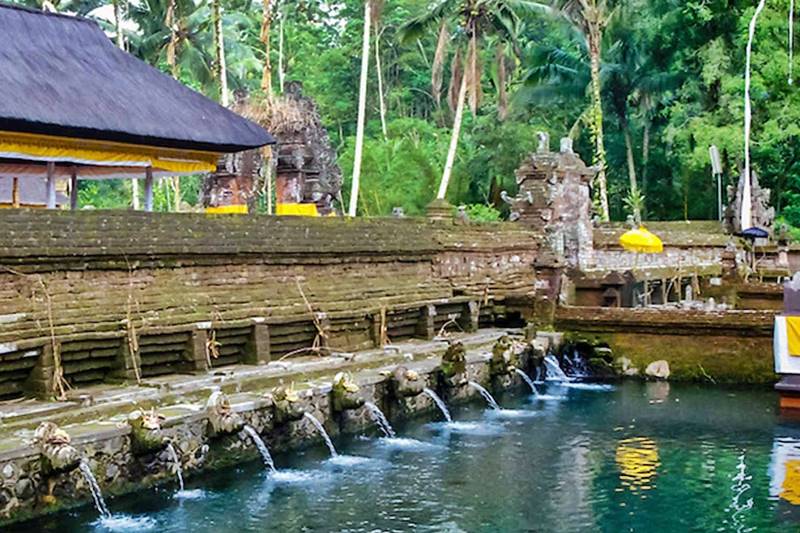
Tirta Empul Temple, also known as Pura Tirta Empul or Tampaksiring Temple, is one of the most famous sacred water temples in Bali, Indonesia.
Located in Tampaksiring Village, Gianyar Regency, this historic Hindu temple is renowned for its natural holy spring, traditional purification rituals, ancient architecture, and important role in Balinese Hindu culture. Surrounded by lush greenery and a peaceful landscape, Tirta Empul Temple is a popular destination for visitors interested in Bali’s spiritual heritage, religious traditions, and cultural attractions.
The temple is particularly famous for its sacred spring water, which Balinese Hindus believe possesses spiritual cleansing and purifying qualities. Every day, local worshippers visit Tirta Empul to pray, make offerings, and participate in melukat, a traditional purification ceremony performed using holy water. The combination of religious significance, historical heritage, and natural beauty makes Tirta Empul Temple one of the most interesting places to visit in central Bali.
Location of Tirta Empul Temple
Tirta Empul Temple is situated in Tampaksiring, Gianyar Regency, in the central part of Bali. The temple lies approximately 30 miles (48 kilometers) from Denpasar, although the actual driving distance and travel time depend on the starting point and traffic conditions. Visitors can generally reach the temple in around one hour from Denpasar and approximately 1.5 hours from Kuta.
The temple is surrounded by green hills, tropical vegetation, and traditional Balinese countryside. Its location also places it near several other popular attractions, including the historic Gunung Kawi Temple, the Tegalalang Rice Terraces, and the cultural village of Ubud.
On the western side of the temple complex stands the Tampaksiring Presidential Palace, officially known as Istana Kepresidenan Tampaksiring. This presidential residence was built during the administration of Indonesia’s first president, Sukarno, and was inaugurated in 1963. The palace provides a notable historical landmark in the area, although access is subject to official regulations.
Thanks to its accessible location and cultural importance, Tirta Empul Temple is frequently included in Bali sightseeing tours, cultural excursions, and private tours with a driver.
History of Tirta Empul Temple
Tirta Empul Temple has a long history connected with the development of Hindu religious traditions in Bali. The temple is traditionally associated with the year 960 AD, during the Warmadewa dynasty, when the sacred spring was recognized as an important place of worship.
The name Tirta Empul is commonly interpreted as referring to sacred water that springs from the earth. In Balinese Hindu tradition, tirta means holy water, while empul is associated with a spring or something that emerges from the ground. The sacred water is therefore central to the temple’s identity and religious purpose.
Historical inscriptions and archaeological remains provide evidence of the site’s importance in Bali’s early religious history. The temple complex contains sacred bathing pools, shrines, courtyards, and other traditional structures used for worship and purification ceremonies.
Over the centuries, Tirta Empul has remained an important spiritual destination for Balinese Hindus. The temple continues to serve as a place for prayer, religious offerings, purification rituals, and ceremonies associated with maintaining harmony between people, nature, and the divine.
The Sacred Spring Water of Tirta Empul
The main attraction of Tirta Empul Temple is its natural spring, which supplies water to the temple’s traditional bathing pools. The clear water flows through a series of fountains, creating a sacred environment for Hindu religious ceremonies.
According to Balinese Hindu beliefs, holy water plays an essential role in purification. It is used during prayers, temple ceremonies, and rituals intended to cleanse spiritual impurities and restore balance. For this reason, Tirta Empul is considered one of Bali’s most significant destinations for sacred water purification.
The bathing pools contain multiple fountains arranged along the pool walls. Worshippers traditionally move from one fountain to another while following the appropriate prayers and ritual practices. Not every fountain is used in the same way, and some have specific ceremonial purposes.
Visitors who wish to participate in the purification ritual should respect local religious customs and follow the guidance of temple staff or a knowledgeable local guide. Appropriate clothing, a respectful attitude, and awareness of ongoing ceremonies are essential when visiting this sacred site.
Although the holy water is traditionally believed to have spiritual benefits, these religious beliefs should not be interpreted as medical evidence that the water can cure physical diseases.
The Legend of Tirta Empul Temple and King Mayadenawa
One of the most well-known stories associated with Tirta Empul Temple is the Balinese legend of King Mayadenawa and the god Indra. This traditional tale explains the sacred origin of the spring and its importance in Balinese Hindu religious life.
According to the legend, Mayadenawa was a powerful king who ruled the region of Bedahulu. He was believed to possess extraordinary abilities, including the power to appear and disappear unexpectedly. However, the king became arrogant and demanded excessive obedience from his people, discouraging them from worshipping the gods.
The story says that his actions brought suffering to the kingdom. People experienced illness, agricultural failures, and other misfortunes, creating hardship for the local community. In response, the god Indra came to confront Mayadenawa and restore balance.
During the battle, Mayadenawa and his followers attempted to escape from Indra’s forces. In one episode of the legend, Mayadenawa created a pool of poisoned water. When Indra’s soldiers drank from it, they became ill or died.
To save his fallen soldiers, Indra struck the ground with his weapon, causing a sacred spring to emerge. The holy water revived the soldiers and restored their strength. This miraculous spring became associated with Tirta Empul, whose water is revered by Balinese Hindus as a source of spiritual purification.
The legend remains an important part of Bali’s cultural heritage and is associated with the meaning of religious devotion, humility, and the restoration of harmony. The story of Mayadenawa is also connected with the Balinese celebration of Galungan, which symbolizes the triumph of dharma, or righteousness, over adharma, or wrongdoing.
Traditional Melukat Purification Ritual
One of the most memorable cultural experiences at Tirta Empul Temple is witnessing or participating in the traditional melukat purification ritual. This sacred ceremony uses holy water to symbolize spiritual cleansing, renewal, and the removal of negative influences.
During the ritual, worshippers enter the bathing pools and move between designated fountains, allowing the sacred water to flow over their heads while offering prayers. The ceremony is performed according to religious customs and personal spiritual intentions.
Melukat is an important part of Balinese Hindu life and can be performed on various occasions, including religious observances, personal milestones, and times when someone seeks spiritual renewal. Although visitors may be permitted to participate, the ritual is a religious practice rather than simply a tourist activity.
Visitors should wear a traditional sarong and follow the temple’s dress code. Swimwear alone is not appropriate for a sacred temple setting. It is also important to respect areas reserved for prayer, avoid disrupting worshippers, and ask permission before photographing people engaged in religious ceremonies.
Temple Architecture and Archaeological Heritage
Beyond its sacred spring, Tirta Empul Temple features traditional Balinese temple architecture and several courtyards used for different religious activities. The complex reflects the distinctive layout of Balinese Hindu temples, with gateways, shrines, open courtyards, and ceremonial spaces.
The bathing pools are among the temple’s most recognizable features, while the surrounding shrines and stone structures contribute to its historical atmosphere. Visitors can explore the temple grounds, observe the traditional architectural details, and learn about the role of water in Balinese religious ceremonies.
Archaeological remains and historical features found in and around the temple area further demonstrate the site’s long-standing cultural importance. Together, these elements make Tirta Empul a valuable destination for travelers interested in Bali’s ancient history, religious architecture, and living traditions.
Tips for Visiting Tirta Empul Temple Bali
To enjoy a respectful and comfortable visit to Tirta Empul Temple, keep the following recommendations in mind:
- Wear appropriate clothing: Cover your shoulders and knees, and follow the temple’s requirements for wearing a sarong.
- Respect religious ceremonies: Keep noise to a minimum and avoid interrupting people who are praying or participating in purification rituals.
- Follow purification guidelines: If you want to take part in melukat, ask temple staff or a local guide about the correct procedure and any applicable requirements.
- Bring a change of clothes: You may get wet if you participate in the bathing ritual.
- Protect your belongings: Use a suitable waterproof bag for valuables and follow the designated arrangements for storing personal items.
- Visit earlier in the day: An early visit may provide a more relaxed experience, although visitor numbers and ceremony schedules vary.
- Bring cash: Cash may be useful for entrance fees, donations, sarong rental, or other services, depending on the current arrangements.
Always check the latest entrance fees, opening hours, and ritual participation rules before your visit, as these details may change.
Nearby Attractions Around Tirta Empul Temple
Tirta Empul Temple can be combined with several other destinations in central Bali for a full-day sightseeing trip.
Gunung Kawi Temple: An archaeological temple complex known for its monumental rock-cut shrines and tranquil setting in a river valley.
Tegalalang Rice Terraces: A popular countryside attraction north of Ubud, famous for its green rice fields, terraced hillsides, and traditional Balinese agricultural landscape.
Ubud Village: A cultural destination known for traditional arts, local markets, galleries, temples, and Balinese cuisine.
Kintamani and Mount Batur: A scenic highland area offering views of the volcanic landscape, Mount Batur, and Lake Batur.
Combining these destinations with Tirta Empul Temple allows visitors to discover Bali’s spiritual traditions, historical landmarks, countryside scenery, and cultural attractions in one journey.
Visit Tirta Empul Temple with a Private Bali Driver
A private Bali tour with a driver is a convenient way to visit Tirta Empul Temple and explore other attractions around Gianyar, Ubud, and central Bali. With private transportation, visitors can arrange their own itinerary, spend more time at places of interest, and travel comfortably between destinations.
A Bali sightseeing tour can include Tirta Empul Temple, Gunung Kawi, Tegalalang Rice Terraces, and Ubud, depending on your schedule and preferences. Air-conditioned cars, family vehicles, minivans, and minibuses can accommodate couples, families, and larger groups.
Whether you are interested in Balinese Hindu culture, sacred spring water, traditional purification rituals, or the island’s historical heritage, Tirta Empul Temple is an important cultural attraction to include in your Bali holiday itinerary. Its sacred spring, ancient traditions, and peaceful surroundings offer a meaningful opportunity to learn about the spiritual life of the Balinese people.
Photo Gallery Tirta Empul Temple Tampak Siring


We are very happy to be lead and show the attractions you visit so that will also show places that are still unique attractions such as Balinese dance, Balinese customs, Panorama Bali and Local Handicrafts with Bali’s price is very cheap. And you can design a tour or a tour that will visit.
Don’t waste your time…
Call our 24 hours hot line (WhatsApp) at: +(62) 81-2397-7705
E-mail: info @ balibushire.com for further information. You can also reach us via Skye to discuss your travel needs and plans.