
Saturday | September 12, 2026
Here is an expanded and more polished version, keeping the original facts while adding context, transitions, and detail:
Police in Australia have apologized to the family of an 18-year-old woman after they were mistakenly told that she had been found alive following an intensive eight-day search through remote and densely forested bushland.
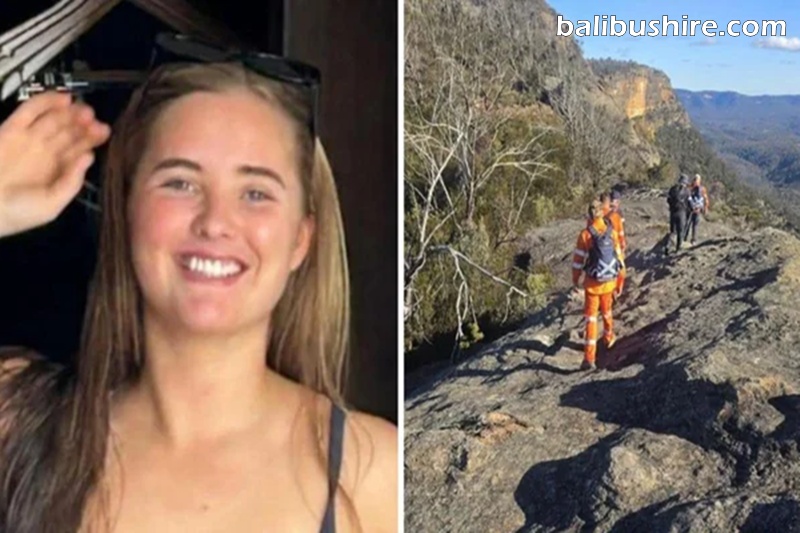
The heartbreaking error occurred during the search for Lily Hooper, a teenager who disappeared while hiking alone in Nattai National Park in New South Wales. Hooper’s body was ultimately recovered from a remote part of the park, but in a tragic case of miscommunication, her family was initially informed that she had been found alive.
The mistaken announcement briefly brought enormous relief to Hooper’s loved ones, who had endured more than a week of uncertainty and fear. Her family members were seen celebrating at the search site after being told that she had been located. The news also spread rapidly, with NSW Premier Chris Minns announcing during a live broadcast of a Senate committee hearing that the missing teenager had survived.
That moment of relief lasted only minutes.
Minns subsequently retracted his announcement and confirmed that Hooper had in fact died. The sudden reversal transformed what had appeared to be a moment of joy into another devastating blow for the family.
“I’m just profoundly sad for her family,” Minns said after correcting his earlier statement.
Eight-Day Search for Missing Teenager
According to NSW Police, Hooper left Oakdale, New South Wales, on August 12 to undertake a solo hike in Nattai National Park. She failed to return home that evening, prompting concerns among her family and leading to a missing-person report.
Authorities quickly launched a large-scale, multi-agency search operation involving police and other emergency and search-and-rescue personnel. Search teams faced difficult conditions as they worked through the park’s rugged landscape, looking for any indication of where Hooper might have gone.
The operation continued for eight days, with rescuers searching remote areas of the national park.
Nattai National Park forms part of the Greater Blue Mountains region and is characterized by rugged wilderness, steep terrain, dense vegetation and imposing sandstone formations. Although the park is only about 50 miles (80 kilometers) from Sydney as the crow flies, its remote landscape can make searches extremely challenging.
The conditions also added to the difficulty. During the week of the search, the area experienced strong winds and cold overnight temperatures, potentially making survival particularly difficult for anyone exposed to the elements.
Confusion After Body Was Recovered
The search finally reached its tragic conclusion early Thursday, when Hooper was located in a remote area.
However, the circumstances surrounding the announcement of her discovery quickly became the subject of another investigation.
NSW Police Commissioner Mal Lanyon said the initial incorrect information resulted from a miscommunication after Hooper was located.
“Sadly this morning there was a miscommunication when Lily’s body was recovered,” Lanyon said at a press conference Thursday.
He offered an unreserved apology to Hooper’s family, acknowledging that the mistake had caused additional emotional trauma at an already devastating time.
“I unreservedly apologize for that miscommunication,” Lanyon said, as well as for “any additional trauma that may have caused Lily’s family, but certainly for the embarrassment and confusion that caused.”
Lanyon explained that the circumstances surrounding Hooper’s discovery involved several people because she was located in a remote part of the park. Information about the discovery therefore had to be communicated through multiple people before reaching authorities and the family.
“The miscommunication obviously was born out of elation that Lily had been found,” Lanyon said. “Tragically, that miscommunication then led to a deflation.”
The commissioner’s comments highlighted how rapidly information can become distorted during complex emergency operations, particularly when multiple agencies and personnel are working in difficult terrain.
Investigation Into What Happened
Authorities are now facing two separate questions.
The first concerns Hooper’s death itself. A coroner will investigate the circumstances and determine the cause of death. That investigation is expected to examine where Hooper was found, the condition of her body and any other circumstances that may help explain what happened during her disappearance.
The second investigation will focus on the communication failure.
Police will examine how information about Hooper’s recovery was initially misunderstood, how it was passed between search personnel and authorities, and why her family and senior officials were told that she had been found alive.
The mistaken announcement has raised questions about communication procedures during major search-and-rescue operations. Accurate information is particularly critical when dealing with missing people, as families can experience extreme emotional distress while waiting for news about their loved ones.
For Hooper’s family, the communication failure meant experiencing an extraordinary emotional reversal: after eight days of fearing the worst, they were briefly led to believe that their daughter had survived, only to learn moments later that she had died.
A Tragic End to a Search
Hooper’s disappearance had drawn considerable attention as search teams worked through some of the most challenging terrain in the region.
Solo hiking can present particular risks in remote Australian wilderness areas, where steep cliffs, dense bush, changing weather and limited access can make it difficult for a person in distress to reach assistance. Even locations that appear relatively close to major cities can become extremely isolated once inside rugged national parkland.
The discovery of Hooper’s body brought the search to an end, but it also left her family and the wider community facing difficult questions.
For police and emergency authorities, the recovery will now be followed by an examination of both the circumstances surrounding the teenager’s death and the communications breakdown that followed.
The priority, officials said, is to establish exactly what happened and ensure that the lessons from the incident are understood.
For Hooper’s loved ones, however, the investigation comes after an already devastating week. They had spent eight days hoping for her safe return, endured the anguish of a missing-person search, experienced a brief moment of overwhelming relief when they were told she had been found alive, and then suffered the shock of learning that the news was wrong.
The tragedy serves as a painful reminder of the emotional stakes involved in missing-person investigations—and of the importance of ensuring that information is verified before it is passed to families or made public.