
Thursday | 9th July 2026
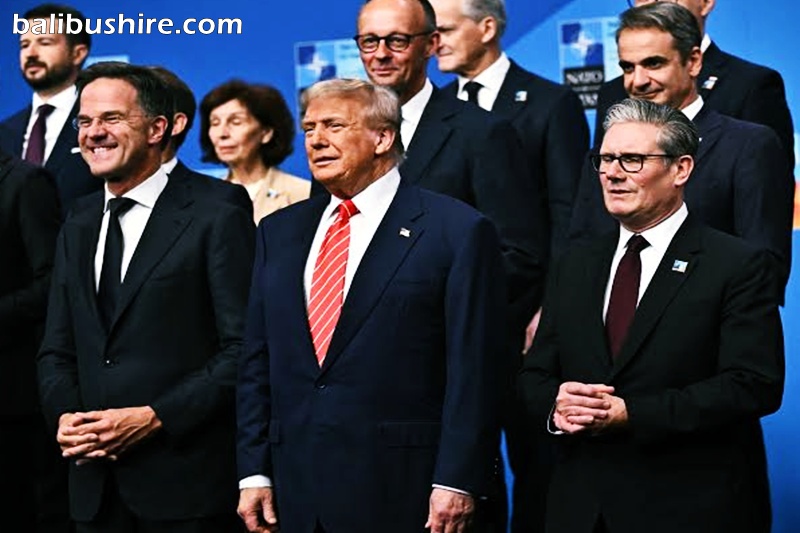
Ankara, Turkey — As European leaders filed into Wednesday’s NATO summit in Ankara, the atmosphere was marked by uncertainty and apprehension. The gathering, intended to demonstrate unity among the alliance’s members at a time of mounting global instability, instead opened under the shadow of President Donald Trump’s increasingly confrontational rhetoric toward America’s closest allies.
Just outside the conference hall, Trump held an impromptu exchange with reporters in which he aired a lengthy list of frustrations with NATO. His grievances ranged from the alliance’s refusal to support renewed American claims over Greenland to Spain’s decision not to allow its military bases to be used during recent operations against Iran. Trump also suggested that the conflict with Tehran, which had briefly appeared to be easing under a newly negotiated agreement, could soon reignite.
As news of Trump’s remarks spread through the summit venue, European leaders quietly prepared for what many feared would become one of the most volatile NATO meetings in recent memory. Several officials privately worried that the US president might once again threaten to abandon the alliance altogether, a possibility that has loomed over NATO since Trump’s return to office. Although such a withdrawal would face significant legal and political hurdles in the United States, the prospect alone was enough to unsettle diplomats who have spent years attempting to preserve transatlantic unity.
Yet the president who entered the closed-door meeting proved noticeably different from the one speaking before television cameras.
According to officials familiar with the discussion, Trump toned down many of his public complaints once seated around the circular conference table alongside fellow heads of state and government. He did not revisit his demands regarding Greenland, nor did he criticize Spain directly despite his earlier comments outside the venue.
Instead, Trump focused primarily on Iran.
He expressed disappointment that NATO members had not offered stronger political backing for the United States during its confrontation with Tehran. He also complained that the interim agreement his administration had reached with Iran only weeks earlier had effectively collapsed after Iranian forces allegedly attacked multiple commercial vessels transiting the strategically vital Strait of Hormuz. In Trump’s telling, the maritime attacks demonstrated that Tehran had violated both the spirit and substance of the accord, leaving Washington little choice but to reconsider its approach.
Despite his criticism, Trump stopped well short of issuing the ultimatum many European officials had feared. He made no formal threat to withdraw the United States from NATO, nor did he question America’s treaty commitments during the closed session.
Instead, several participants said he appeared receptive when alliance members detailed their increased defense spending and military modernization efforts. NATO Secretary General Mark Rutte repeatedly credited Trump’s years of pressure for pushing European governments to invest more heavily in their armed forces, a message carefully crafted to appeal to the president’s long-standing argument that Washington has carried an unfair share of the alliance’s security burden.
One of Trump’s few complaints during the meeting had little to do with defense policy.
He lamented that journalists had not been allowed inside the summit room to witness what he described as overwhelmingly positive exchanges between himself and fellow leaders.
“They like the job I’m doing,” Trump later told reporters as the summit concluded. “They said, ‘We love, sir, we love you.’ These are grown people saying that. Isn’t that nice?”
Diplomats familiar with the conversations suggested Trump’s account was considerably more enthusiastic than reality. Even the president himself briefly acknowledged that some of the praise directed toward him may have been carefully calculated diplomacy rather than genuine admiration.
“Maybe they were trying to get to me,” Trump admitted with a shrug. “And, in a way, they did.”
That candid observation reflected the strategy many European leaders deliberately adopted throughout the summit. Under the guidance of Rutte—who has become known for his ability to maintain cordial relations with Trump—the alliance sought to minimize confrontation and instead emphasize areas where the president could claim personal success.
Privately, however, several European officials acknowledged discomfort with what they viewed as excessive flattery. Many believed preserving NATO cohesion required accommodating Trump’s political style, even if it came at the cost of diplomatic pride.
The approach appeared to pay dividends.
Only hours later, during a separate meeting with Ukrainian President Volodymyr Zelensky, Trump hinted that his administration was preparing to permit Ukraine to manufacture Patriot missile interceptor components domestically, a potentially significant shift in American support for Kyiv’s defense industry.
Such a development would represent a remarkable turnaround in Trump’s relationship with Zelensky, who had endured sharp public criticism from the US president during an Oval Office meeting more than a year earlier.
“I just want to say there was tremendous love in that room,” Trump declared before leaving Ankara.
Whether that goodwill proves durable remains uncertain.
Only three weeks earlier, during the Group of Seven summit in France, Trump had enthusiastically praised the same Iran agreement that he now described as effectively dead. The rapid reversal highlighted how quickly diplomatic understandings can shift under his administration and how fragile summit achievements often become once leaders return home.
Nevertheless, for many European governments, even a temporary easing of tensions represented meaningful progress.
Before arriving in Ankara, Trump had privately discussed reducing the American military presence in Europe by as much as one-third, according to officials familiar with internal deliberations. Simply avoiding such an announcement was viewed by many allies as a significant success.
For Mark Rutte, the outcome represented the culmination of months of careful diplomacy.
Ever since Trump departed the 2025 NATO summit in the Netherlands expressing unusually favorable views about the alliance, Rutte had worked methodically to preserve that momentum while preparing European governments for another potentially difficult encounter.
An unexpected partner in that effort was Turkish President Recep Tayyip Erdoğan.
Although Erdoğan has frequently clashed with NATO allies over democratic governance, regional security disputes, and Turkey’s foreign policy, he has maintained a notably warm personal relationship with Trump. The American president repeatedly stated that Erdoğan’s role as summit host was a major reason he chose to attend the gathering at all.
Even so, Trump’s arrival in Ankara hardly suggested the meeting would be free of tension.
In the weeks leading up to the summit, he had reignited several political feuds, including an increasingly public disagreement with Italian Prime Minister Giorgia Meloni. Shortly before departing for Turkey, Trump posted a photograph of Meloni on social media accompanied by the caption: “RESTRAINING ORDER NEEDED.”
The disagreement appeared unresolved when the two leaders attended Tuesday evening’s official summit dinner, where guests sampled traditional Turkish dishes including pide flatbreads and manti dumplings. Observers noted little interaction between the pair throughout the evening, and it remained unclear whether they found an opportunity to reconcile.
Asked later about her relationship with Trump, Meloni described it simply as “cordial.”
Erdoğan, meanwhile, orchestrated an elaborate welcome ceremony that reflected both Turkish hospitality and his own appreciation for highly personalized displays of state power.
As Trump’s newly acquired Qatari-donated Air Force One landed in Ankara, military honor guards lined the tarmac while mounted cavalry escorted the presidential motorcade toward Erdoğan’s palace. Fighter jets streaked overhead, leaving trails of turquoise smoke alongside the traditional red, white and blue colors associated with the United States.
Trump appeared particularly impressed by Turkey’s infrastructure.
He repeatedly praised Ankara’s airport, road network, and public facilities, describing the city’s development in glowing terms.
“Everything was beautiful,” he remarked.
The president also signaled what many viewed as a substantial diplomatic concession toward Turkey.
He suggested his administration was prepared to allow Ankara back into the F-35 fighter jet program after years of exclusion stemming from Turkey’s purchase of Russian air defense systems. Although any final decision would still require navigating congressional restrictions that currently prohibit such sales, the comments represented one of Erdoğan’s most significant diplomatic gains in years.
Ultimately, Trump’s visit to Ankara served as an illustration of how allied leaders have increasingly learned to navigate his unpredictable leadership style. Rather than confronting him directly, they sought to channel discussions toward subjects likely to earn his approval while avoiding issues that could provoke confrontation.
Iran, however, appeared unwilling—or unable—to adopt a similar strategy.
Only weeks earlier, Trump had publicly described Iranian leaders as “rational” and “smart” while promoting his diplomatic agreement with Tehran. By the time he departed Ankara, his language had shifted dramatically.
He now labeled Iran’s leadership “scum” and “cuckoo,” accusing them of endangering global commerce by repeatedly targeting commercial shipping in the Strait of Hormuz.
Trump also devoted unusual attention throughout the summit to what he described as ongoing Iranian assassination threats against him personally.
He repeatedly reminded reporters that he remained Iran’s “number one” target, referencing chants calling for his death that emerged during funeral ceremonies held over the weekend for the late Supreme Leader Ali Khamenei.
It was unclear why the president emphasized the threats so heavily during the summit. Ankara lies roughly 1,000 miles from Iran’s border, yet the regional proximity and heightened security environment appeared to reinforce his concerns.
Those anxieties intensified speculation when Trump unexpectedly departed Turkey aboard the older presidential aircraft rather than the newer Qatari-donated plane he had used upon arrival. The last-minute change prompted widespread questions among reporters about whether intelligence agencies had detected a possible security threat.
Journalists traveling with the president were instructed to lower their window shades during takeoff, further fueling speculation.
When questioned about the aircraft switch during his closing press conference, Trump dismissed any connection to security concerns. He insisted the decision had simply been intended to allow the newer aircraft to be showcased separately to American service members stationed at an air base in Britain.
Still, moments before boarding the older Air Force One for the flight home, the president once again reflected on the risks he believes accompany his presidency.
“I’m number one on the kill list for Iran,” Trump said. After a brief pause, he added with characteristic defiance, “They’re lovely people.”
Then, shrugging off the danger, he concluded, “I don’t really care, because I’m doing my job.”