
Tuesday | 28th July 2026
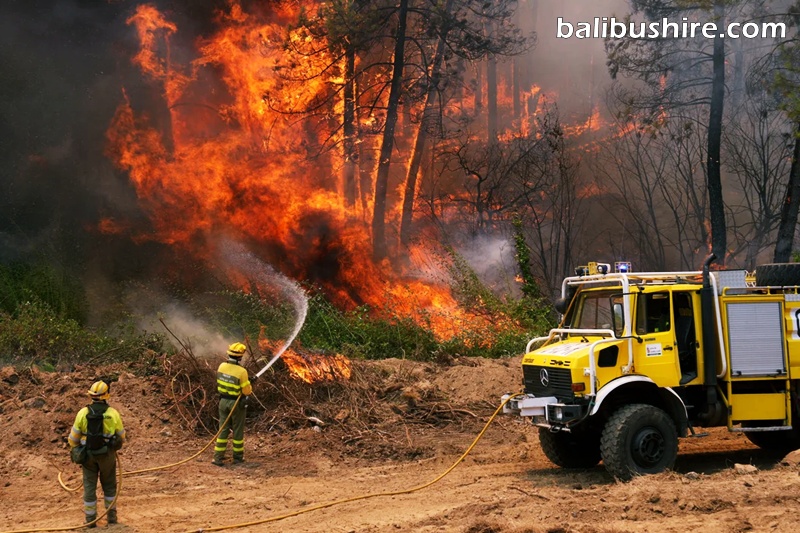
France issued fresh heat warnings Tuesday for the southwestern departments of Gironde and Landes as firefighters continued battling one of the country’s largest wildfires in decades near the city of Bordeaux. Authorities fear another surge in temperatures could reignite active fire fronts and complicate efforts to bring the blaze under full control.
The massive Gironde wildfire has already scorched more than 100,000 acres (about 40,500 hectares) of forest—an area roughly four times the size of Paris—and destroyed more than 240 homes. While French officials said the fire’s spread has slowed in recent days, they cautioned that it remains far from extinguished and could flare up again if weather conditions deteriorate.
Interior Minister Laurent Nunez said firefighters had succeeded in stabilizing the fire’s perimeter in several sectors but warned that the blaze remains unpredictable.
“In fact, it has a life of its own,” Nunez said, describing how shifting winds, extremely dry vegetation and prolonged heat have allowed the fire to generate its own behavior. He explained that repeated heat waves over recent summers have left forests exceptionally dry, creating ideal conditions for flames to spread rapidly through dense pine woodland.
French President Emmanuel Macron described the disaster as the country’s worst wildfire crisis since World War II. During a visit Monday to a firefighting coordination center, Macron thanked emergency crews for their efforts and urged them to “stay strong” as they continue working under exhausting conditions.
Thousands of firefighters, supported by water-dropping aircraft, helicopters and specialized emergency teams, remain deployed across the region. Their immediate priority is preventing the flames from reaching additional communities before another spell of extreme heat arrives later this week. Authorities have also warned residents to remain alert as changing winds could quickly alter the fire’s direction.
Spain Faces Multiple Fire Emergencies
France is not alone in confronting devastating wildfires. Neighboring Spain is also struggling with numerous major blazes stretching from the outskirts of Madrid to the provinces of Ávila, Toledo and the eastern Valencia region.
According to the Associated Press, Spanish authorities have evacuated approximately 79,000 residents from threatened communities, while another 30,000 people have been instructed to remain indoors because of dangerous smoke and rapidly changing fire conditions.
One of the most severe fires is burning in Ávila province, where officials say the blaze has become the largest wildfire ever recorded in Spain. The fire has consumed approximately 195 square miles (about 505 square kilometers), destroying forests, farmland and wildlife habitat.
Spain’s national weather agency warned that another intense heat wave is approaching, with temperatures expected to exceed 104 degrees Fahrenheit (40 degrees Celsius) across parts of the country. Meteorologists fear the combination of scorching temperatures, low humidity and gusty winds could dramatically increase fire activity over the coming days.
Hidden Dangers Beyond the Flames
Firefighters in Spain’s eastern Castellón province are facing an additional hazard rarely encountered during wildfire operations: unexploded ordnance left behind from the Spanish Civil War nearly nine decades ago.
Officials said shells, bombs and other munitions remain scattered across remote mountainous areas where crews are working to contain advancing flames. The presence of these explosives forces firefighters to proceed with extreme caution, slowing suppression efforts and increasing the risks faced by emergency personnel.
Extreme Weather Continues to Fuel the Crisis
Weather conditions remain one of the biggest challenges in both France and Spain. France’s national weather service forecasts continued hot, dry weather with virtually no rainfall expected across the hardest-hit regions, meaning vegetation will remain highly flammable.
Spanish officials issued similar warnings, saying strong winds combined with another period of exceptional heat could rapidly change the direction and intensity of several fires. Emergency planners are preparing for the possibility of additional evacuations if flames threaten more towns and villages.
Climate experts have repeatedly warned that longer, more intense heat waves are increasing the frequency and severity of wildfires across southern Europe. Extended periods of drought dry out forests and grasslands, allowing fires to spread faster and burn with greater intensity.
Authorities in both France and Spain cautioned that even after the visible flames are brought under control, the battle will not be over. Deep-burning hotspots can continue smoldering underground for weeks or even months, raising the risk of new flare-ups. Officials warned that some of the current wildfires may take months to fully extinguish, requiring continued monitoring and firefighting operations long after the immediate emergency has passed.