
Tuesday | 19th May 2026
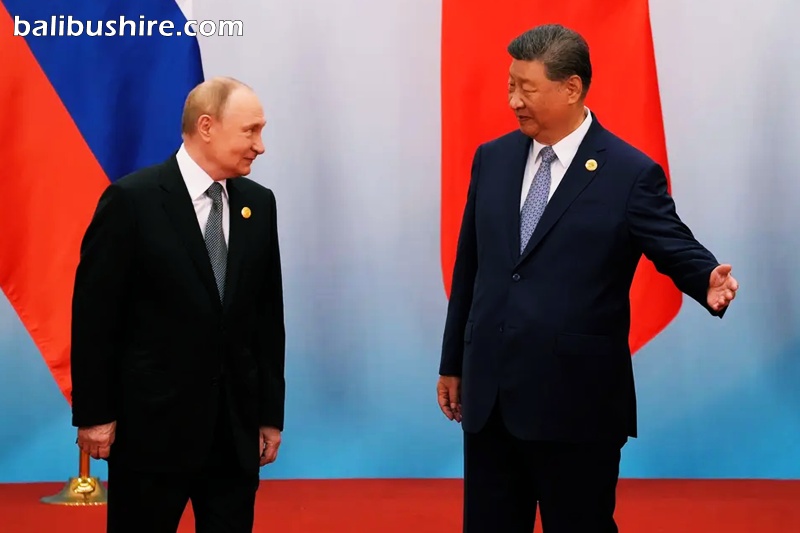
Beijing — Less than a week after Chinese leader Xi Jinping rolled out the red carpet for US President Donald Trump in Beijing, the Chinese capital is once again preparing for a carefully choreographed display of diplomatic theater — this time for one of China’s closest strategic partners.
Russian President Vladimir Putin is scheduled to arrive in Beijing on Tuesday for a high-profile state visit that underscores the deepening alignment between Beijing and Moscow at a moment of extraordinary global turbulence. The visit comes as both powers seek to navigate rapidly shifting ties with Washington while also weighing how, or whether, they might position themselves amid the intensifying conflict involving the United States and Iran — a crisis that has rattled global energy markets and diverted American attention away from Russia’s grinding war in Ukraine.
The symbolism surrounding the visit is difficult to miss. Within the span of just one week, Xi will have hosted two world leaders who are each deeply entangled in major geopolitical confrontations of their own making. Chinese officials and state media have increasingly used the chaos surrounding the US-Iran conflict to portray China as a steadier, more responsible global actor capable of offering an alternative to what Beijing characterizes as American unpredictability and confrontation.
For both China and Russia, Trump’s dramatic reshaping of traditional US foreign policy has also created opportunities. Beijing and Moscow have increasingly framed themselves as architects of a new global order — one less dominated by American influence and less dependent on US-led alliances and institutions that have shaped international politics since the end of World War II.
Putin’s upcoming trip marks his 25th visit to China during his more than two decades in power, reflecting how dramatically relations between the two countries have evolved over the years. What was once a cautious partnership has transformed into an increasingly close strategic relationship spanning trade, energy, military cooperation and diplomatic coordination. Their alignment has been fueled not only by shared suspicion toward Washington but also by what appears to be a genuine personal rapport between the two leaders.
Xi and Putin often refer to one another as “dear friend” or “old friend” in public remarks, and the two men have now met more than 40 times — an unusually high number even among close world leaders. Their repeated meetings have become emblematic of a partnership both governments insist has “no limits,” even as Western governments continue to warn about the implications of closer China-Russia cooperation.
As this is a full state-level visit, Putin is expected to receive the same lavish treatment afforded to Trump during his recent trip. Ceremonial honors are likely to include a grand welcoming event featuring a red carpet reception, military honor guards, official banquets and performances by military bands — all designed to project unity and mutual respect between the two powers.
Ahead of his arrival, Putin released a traditional pre-visit message praising bilateral ties and declaring that relations between Russia and China had reached a “truly unprecedented level.” He emphasized that both nations consistently support one another on issues tied to sovereignty, territorial integrity and core national interests — language that reflects their mutual opposition to Western pressure and criticism.
Chinese state media echoed that message in the days leading up to the summit, publishing glowing commentaries about the “unshakeable” partnership between Beijing and Moscow amid what officials describe as a volatile and dangerous international environment. The state-backed newspaper Global Times went further, portraying the nearly back-to-back visits by the American and Russian presidents as evidence that China is increasingly becoming the center of global diplomacy and international decision-making.
At the heart of the talks between Xi and Putin will be a series of urgent geopolitical and economic issues reshaping the international landscape. According to officials from both sides, discussions are expected to cover Xi’s recent meeting with Trump, the wars in Ukraine and the Middle East, expanding cooperation in energy and trade, and coordination on broader security matters.
The two leaders are also expected to publicly promote their shared vision for what they call a “multipolar world” — an international system where power is distributed among several major countries rather than concentrated in the hands of the United States. Kremlin aide Yury Ushakov said the leaders are preparing joint declarations focused on building a “new type of international relations,” language frequently used by both governments to challenge the Western-led global order.
This is far from the first time Beijing and Moscow have coordinated closely around major US diplomatic developments. Putin and Xi held talks only hours after Trump’s inauguration last year, shortly after Trump himself had spoken with Xi. In recent years, Putin has also regularly briefed Xi on negotiations and contacts with Washington regarding the Ukraine conflict, underscoring the level of strategic communication between the two governments.
For Putin, this latest meeting may carry additional urgency. Russia’s military has suffered significant setbacks during the more than four-year war in Ukraine, increasing Moscow’s dependence on China economically and diplomatically. China has become a crucial economic lifeline for Russia under sweeping Western sanctions, purchasing massive quantities of Russian oil while exporting goods and technologies that analysts say help sustain Moscow’s wartime economy.
That growing dependence has also shifted the balance within the relationship. While the Kremlin continues to publicly present the partnership as one of equals, many analysts increasingly see Russia becoming the junior partner to a far wealthier and technologically more advanced China.
Energy cooperation is expected to feature prominently during the talks. Russia is already China’s largest supplier of crude oil, with Chinese refiners taking advantage of heavily discounted Russian exports after Western sanctions were imposed following the invasion of Ukraine.
Now, instability in the Middle East — particularly concerns surrounding Iranian oil supplies and threats to shipping through the Strait of Hormuz — may push Beijing to deepen its reliance on Russian energy even further.
Among the projects expected to be discussed is the long-delayed Power of Siberia 2 gas pipeline, a massive infrastructure proposal designed to send additional Russian natural gas to China. The project, which has been under discussion for years, gained renewed momentum during Putin’s previous visit to China in September 2025, and both sides are under growing pressure to finalize key details.
Yet the shadow of the Iran conflict is likely to dominate many aspects of the discussions, especially in the aftermath of Trump’s Beijing visit. During talks with Xi last week, Trump reportedly sought Chinese cooperation on certain aspects of the crisis. According to a White House statement, both leaders agreed on the importance of preventing Iran from obtaining a nuclear weapon and reopening the strategically vital Strait of Hormuz.
Both China and Russia maintain close relationships with Tehran and have repeatedly shielded Iran from Western pressure and sanctions. China remains the largest purchaser of Iranian crude oil despite US sanctions, while Russia has strengthened security and military cooperation with Tehran in recent years.
CNN previously reported that Russia provided Iran with intelligence regarding the locations of American military assets as the conflict escalated. Last month, sources also told CNN that China was preparing potential weapons shipments to Iran, though Beijing has strongly denied those claims.
Against that backdrop, growing questions now surround whether China and Russia may seek to position themselves as potential mediators or guarantors in any future peace arrangement. Iranian officials have previously indicated interest in both countries playing some form of security role should negotiations eventually emerge.
For Xi and Putin, however, any involvement in a diplomatic settlement would require careful calculation. Helping end the conflict could potentially improve ties with Washington and strengthen their global standing. But both leaders must also protect their own strategic relationships with Tehran while advancing their broader ambitions to reshape the international order in ways less dependent on American power.